2020年4月21日 星期二

week 8. design fiction (revisiting Neuromancer)

1. students present images of Neuromancer chap1,2
2. What is Design Fiction?
    What is Prop?
    What is Diegetic Prototype?


source: Design Fiction: A Short Essay on Design, Science, Fact and Fiction


Bruce Sterling 
ACM Interaction 2009 cover story, Design Fiction by Bruce Sterling

Examples:
Postscape Design Fiction
Core77 Speculative Design

The Solution Printer: Magic Realist Design Fiction


Discussion:
1. What are the differences between Design Fiction and Speculative Design?
    (clear fiction v.s. techno-poetic speculation)
2. Aesthetics of speculation: What if an an everyday object is a diegetic prototype of another possible world?


How about science fiction?


also see TEI 2017 student design challenge references:

Watching/Reading List
We encourage wild, obscure references to any kind of sci-fi media. Here’s some our favourite to get you started


      • Vermilion sands [JG Ballard] - Houses with memory, living fashion and sound jewellry.
      • Rainbows End [Vernor Vinge] - Augmented Reality, haptic feedback and silent messages.
      • Snow Crash [Neil Stephenson] - Virtual reality, physical augmentations.
      • Her [Spike Jonze] - computers as people, ubiquitous computing, super AI.
      • Matrix [The Wachowski Brothers] - simulated reality, downloading programs into the brain
      • Blade Runner [Ridley Scott] - Dystopian futures, Androids and AI, replication of beings.
      • Brainstorm [Douglas Trumbull] - physically experiencing somebody else's reality
      • Diamond Age [Neil Stephenson] - parenting from afar via evolving storytelling
      • Dune [Frank Herbert] - cognitive augmentation

https://tei.acm.org/2017/sdc.php


九龍城寨


EX:
觀察生活周遭, 拍照片表達對照的概念
   例如:
   未來 vs. 過去, 推測的世界 (what we have the potential to become) vs. 現狀  (what we are) 
   都市場景, 交通工具, 廢墟/大樓, 生活用品, 信仰, 政治, 國際經濟, 權力, 社會制度, 家庭制    度, 教育, 身體, 運動, 休閒, 品牌, 符號, 文字, 自然環境, 物種....


Reference:

Design fictions an introduction and provisional taxonomy

by Derek Hales

Neuromancer
Part I : Chiba City Blues

"The sky above the port was the color of television, tuned to a dead channel."

神經喚術士
第一部: 千葉市藍調

"港口上空是電視的顏色,電視調至死頻的顏色。"


https://www.youtube.com/watch?v=b1kJI-UvYwQ
https://www.youtube.com/watch?v=NNVbrHjX-xs


2020年4月14日 星期二

week 7. aesthetics of speculation

1. design fiction slides by Bleecker:


2. Practice "Poetics of design fictions" design process

https://en.wikipedia.org/wiki/Aesthetics


Questions:
What is "speculation"? What is speculative design? What is aesthetics of speculation?

naive realism 素樸實在論.  modal realism (MR) 模態實在論, possiblist realism 可能主義實在論, speculative realism (SR) 推測實在論

pragmatist aesthetics 實用主義美學 (Dewey), speculative aesthetics 推測美學


學生報告分享 (4/22):
用一張照片(拍攝或下載均可)或繪圖,詮釋"神經喚術士"第一、二章的一個情境,(可以搭配書中句子)


學生報告 (4/29):
speculative aesthetics around the life world:
觀察生活周遭, 拍照片表達奇異的推測美感(aesthetics of speculation)、技術詩意(techno-poetic)、類平行世界、almost impossible reality。
  
  參考: Lynne Cohen, Lucinda Devlin, Mike Mandel and Larry Sultan


Lars Tunbjörk’s Alien at the Office (2004)   (mundane spaces that seem extraordinary. Yet these alien spaces are where many people spend their working lives)


Lucinda Devlin's photos:
http://www.lucindadevlin.com/

Lynne Cohen's artworks:
http://www.lynne-cohen.com/
Lynne Cohen’s Occupied Territory (1987)


Taryn Simon’s An American Index of the Modern and Unfamiliar9 (2007)

Richard Ross’s Architecture of Authority10 (2007)


(The above three examples reveal spaces that we know must exist but have no idea how they look. They have a harsh, inhuman quality, stripped down to the absolute essentials, emphasizing their purpose.


Lucinda Devlin’s The Omega Suites (1991–1998)  provides glimpses into extreme
but ghoulish spaces—execution chambers, the places where the state, on its
citizens’ behalf, takes people’s lives. They are clinical, easy-to-maintain,
brutally engineered environments designed to achieve one purpose—the
humane killing of human beings. They include safety measures, provision for
last-minute retrieval, and the need for the event to be witnessed.


Larry Sultan's Untitled Evidence:
http://larrysultan.com/gallery/evidence/ : gathered images from the archives of research centers,
laboratories, test sites, and industrial facilities, presented without captions
or other information. They compel us to interpret what is going on, to project
stories and meanings onto them, illustrating that even objective records are
rarely neutral.

For us, these are the proto-images for an aesthetics of speculation. They
suggest a techno-poetic landscape situated somewhere between what we are

and what we have the potential to become.

Deadline: 2020/4/29

印出兩張與同學交換。


Questions:
What are the possible qualities of speculative aesthetics?  for example:
out-of-place,
out-of-time,
multiple possible worlds,
hidden truth,
object's viewpoint,
other unknown actor's viewpoint,
other species viewpoints
withdrawal,
resistance,
object's enjoyment (allure, emotion),
non-human (machine, AI)'s perspective,
strange object-to-object relationship,
...
Constructively identify at least 20 qualities by concluding classmates' sharing.


Example :


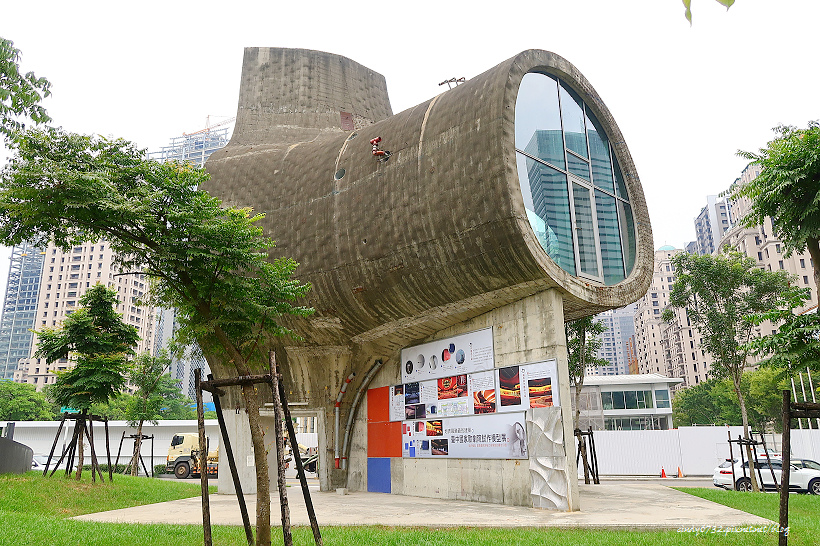
國家歌劇院的試作模型

Reading:
Speculative aesthetics

Speculative Aesthetics and Object-Oriented Inquiry (OOI),” by N. Katherine Hayles 

 Graham Harman: “Aesthetics as First Philosophy"
 p. 159:

The essential move here is to identify aesthetics with “enjoyment” (Levinas’s term) or “allure” (Harman’s) so that the sensual qualities of objects in which other objects “bathe” is understood as an essentially aesthetic response. Thus aesthetics is generalised so that it applies not only to humans but to all objects, including inanimate ones.

p. 167:


Following Harman, Bogost accepts that “all objects recede interminably (沒完沒了的) into themselves,” which implies that putting things “at the center of a new metaphysics also requires us to admit that they do not exist just for us.”
p. 168:

"we never understand the alien experience, we only ever reach for it metaphorically.”
p. 169:
"Where I begin to depart from Bogost and Harman is on the issue of how objects manifest themselves. Whereas they emphasise an object’s allure, the attraction it emanates for other objects, more important in my experience is the resistance objects offer to human manipulation and understanding"
"The difference between resistance and acquiescence is that acquiescence is always metaphoric, whereas resistance is decisive: “Whatever I am, I’m not that,” an object can respond to human probing."
 p. 178.
"I ended by arguing that the way to escape anthropocentrism is precisely through an imaginative projection into the worldviews of other objects and beings, based on evidence about their ways of being in the world,"


2020年3月24日 星期二

week 5. fictional soundscape

Ekkomaten—exploring the echo as a design fiction concept


Forever Mankind - A BBC Radio Sci-Fi Drama


Moon graffiti by Near Future Lab (Counterfactual thought experiment)


The truth podcast: Moon Graffiti, 2011/2/11
http://www.thetruthpodcast.com/story/2015/10/15/moon-graffiti

Feature Lab:
  Near Future Lab
  Blog

非洲太空計畫


Once Upon a Future - IoX project

different layers of sounds in science fiction movie


https://www.youtube.com/watch?v=-fu7jN2_2pE

https://www.youtube.com/watch?v=u9L0pord5jE


 Science fiction radio play by BBC


Frozen in Time A BBC Radio Sci Fi Drama


SCIFI Channel: DUST

https://www.youtube.com/watch?v=an6DRN4flZM

https://www.youtube.com/watch?v=EgQisaKqcHc


Confabulation/Speculation/Reminiscence ?

中文科幻廣播劇:
https://www.youtube.com/watch?v=V1TUcVGSLWg


Imagine you are a future anthropologist, record soundscape of Taipei:
record the following 4 types of sound

1. Ambient sound
2. Foreground sound (music, movie themes...)
3. human voice, conversation, news report, TV talk show...
4. sound clips from science fiction films


Reference:
http://www.ambient-mixer.com/
https://voicechanger.io/
https://coffitivity.com/

Speculative Archaeology  demo  examples:

http://designfictions2013.blogspot.com/2014/05/week-12-midterm-fictional-ethnography.html
http://designfictions2013.blogspot.com/2015/12/week-13-fictional-ethnography-demo.htm
l


week 4. narratives in possible worlds

1. student presentation (愛因斯坦的夢)
2. what is "narrative" in science fiction?
3. What is "counterfactual narratives" ?
(reading: 可能世界理論.pdf  part III)

Markussen & Knutz (2013) Design fiction 時間架構圖:


EX:
1. 選擇一個電影或小說,具有特殊的時間空間敘事架構 (例如,你的名字、明天的我要和昨天的你約會、觸不到的戀人、江之島三稜鏡、現在很想見你、回到未來、....)
2. 依照上圖的原則,畫出敘事架構圖。(世界,多重世界,自我,敘事者,自我複本,年代,時間幾何...)
3. 以自己的聲音,或同學的聲音,編輯一段聲景 (soundscape),.呈現fictional world, 可以包含音樂、環境音、日常物件聲,人聲...

Deardline 4/8/2020 上課分享
上傳到Google drive (公布於 FB 課程社團)

參考:
Thomas Markussen and Eva Knutz. 2013. The poetics of design fiction. In Proceedings of the 6th International Conference on Designing Pleasurable Products and Interfaces (DPPI '13). ACM, New York, NY, USA, 231-240.

2020年3月16日 星期一

week 3. parallel universes

相較於哲學上對多重實在的形上學探討,物理學更聚焦在「真實世界」的多重性詮釋,即所謂的「平 行宇宙」(parallel universes)。Max Tegmark (2003)發表在美國科學人雜誌上的論文,提出平行宇宙的四 個層次的分類學:

Level 1:
形成我們所在的宇宙的組合方式必定發生過不只一 次,與我們自身相似的對應體(counterparts)必然存在於多重宇宙的某處。在某個與我們宇宙相近的複 本中,我們的對應體正經歷著另一個不一樣的命運。Tegmark 描述第一層次的平行宇宙有相同的物理 定律,但可能在初始值的設定上不同,例如,與我們最接近的複本中的我們的幽靈,已經經歷了 2020 年。


also see:
https://twinstrangers.net/

Level 2:
第二層的另類空間來自於宇宙大爆炸以來,空間的不規則的伸展,所形成的多重世界。根據 Tegmark 的說法,有些區域已經停止伸展並且形成泡泡,而當此泡泡爆炸,便形成新的第一層次多重宇宙。因 此,第二層次的宇宙來自於空間中的遞迴式嵌入(recursive embedding),而 Brian Greene 認為此種現象 是所謂的黑洞效應。...Tegmark 則 認爲 level 2 宇宙與 level 1 有相同的物理定律,但只是在常數和等式中代入不同的數字。

Level 4 第四層次的宇宙基來自於一個思想實驗(thought experiment):此類型宇宙的物理定律沒有絕對的必然 和我們所處的宇宙完全一樣。Tegmark 提問,一個遵循古典物理卻沒有量子效應的宇宙會如何? 時間 是離散(discrete)而非連續的宇宙會如何?Tegmark 建議 level 4 宇宙是所有數學可以描述的所有可能 世界,唯一的限制就是 level 4 宇宙不可違反數學邏輯。

Level 3 這個類型的平行宇宙就是發生在次原子層次最聲名狼藉的奇怪現象,使得物理學家做出平行宇宙的假 設。不同於 level 2 和 level 4(可能與目前的物理定律不同),level 3 對於量子現象之多重世界詮釋,並 未違反任何物理定律。次原子粒子的行為,例如電子,無法以絕對的確定性預測,僅可以機率描述, 但無法預測此機率的哪一部分被真實化(actualized),此機率以數學描述即是所謂粒子的波形函數(wave function of the particle),著名的薛丁格等式(Schrödinger equation)。量子力學的隨機函數,暗示了多重 可能世界:一個電子所有可能的位置和軌跡,只有一個會被實現,其他僅以可能的機率被理解。


哥本哈根詮釋
"哥本哈根詮釋(Copenhagen interpretation)是量子力學的一種詮釋。根據哥本哈根詮釋,在量子力學裏,量子系統的量子態,可以用波函數來描述,這是量子力學的一個關鍵特色,波函數是個數學函數,專門用來計算粒子在某位置或處於某種運動狀態的機率,測量的動作造成了波函數塌縮,原本的量子態機率地塌縮成一個測量所允許的量子態。”  ~wiki


雙縫實驗


量子延遲:


惠勒延遲實驗:


https://www.bilibili.com/video/av25010229/

延遲實驗中量子改變過去:


https://www.bilibili.com/video/av11761018/

量子糾纏


 塌縮 (collapse)
1. 如果應用在人的回憶,是否有相同的現象?
2. 所謂歷史,是否有實在論 (realism),量子觀的歷史如何看待塌縮?
3. 測量是甚麼,意圖在測量中扮演的腳色如何?
4. "意圖"在回顧已發生事件中的腳色如何?
5. 逆向因果律的可能性。


參考文獻:
1. Max Tegmark. 2003. Parallel universes. Scientific American. May, 40-51.

2020年3月9日 星期一

week 2. possible world theory

中文計劃書資料: 可能世界理論
1. 可能主義實在論 (possiblist realism)
2. 真實主義再現論 (actualist representationism)

1. The universe of possible worlds is constantly expanding and diversifying
thanks to the incessant world-constructing activity of human minds and
hands. Literary fiction is probably the most active experimental

laboratory of the world-constructing enterprise. p. 69, SE


2. 
As Lubomír Doležel writes in Heterocosmica: Fiction and Possible Worlds,

“Our actual world is surrounded by an infinity of other possible worlds.” p. 70, SE

3. Make-believe theory, make-believe play

4. 
Although rarely discussed in design beyond the construction of
brand worlds and corporate future technology videos, there is a rich
body of theoretical work in other fields dealing with the idea of fictional
worlds. Probably the most abstract discussion is in philosophy where
differences between the many shades of real, fictional, possible, actual,
unreal, and imaginary are teased out. In social and political science the
focus is on modeling reality; in literary theory it is on the semantics of
the real and nonreal; in fine art, make-believe theory and fiction; in
game design, literal world creation; and even in science there are many
rich strands of discourse around fictionalism, useful fictions, model
organisms, and multiverses. For us, the key distinction is between
actual and fictional. Actual is part of the world we occupy whereas
fictional is not. p. 70, SE

5.
Speculating is based on imagination, the ability to literally (如實地) imagine

other worlds and alternatives.

6.
Possible worlds is a philosophical concept developed in the
latter twentieth century by the analytical school, including
philosophers Saul Kripke and David Lewis [34, 48] and
was later adopted by literary theorists [cf. 38, 22, 45].
Philosophically, possible worlds is an approach to the
problem of counterfactual statements in modal logic. For
example, Kripke asks what is the truth condition of the
statement that Sherlock Holmes “does not exist, but in other
states of affairs he would have existed” [31]; or this
counterfactual statement by Ryan [48], “if a couple hundred
more Florida voters had voted for Gore in 2000, the Iraq
war would not have happened.” In modal logic, the
question is how is each of these counterfactual statements
interpreted to be true or false. The philosopher David Lewis
who bridged analytical philosophy to literary theory [32]
offered the position that propositions like counterfactual
statements can be seen to be either true or false dependent
on in which worlds the statement is true and which worlds

the statement is false [34]. p. 100, MS


7.
A counterfactual is a virtual or
tangible artifact or system in design and HCI rather than
statement or text. Hence we refer to it as a counterfactual
artifact. The notion of an actual counterfactual is a
departure from Lewis’ criterion that possible worlds have
no spatial or temporal connections to the actual world—
they are remote. Yet, here we view this departure more
advantageously than negatively. p. 101, MS

8. There is a productive and creative space at the boundary

between the actual and possible worlds, or the real and the
fictional. There are many examples from fiction in literary
texts, theatre or film where authors intentionally blur the
distinction between actual and possible worlds for its
creative possibilities. p. 101, MS

9. 
In these cases, interactivity is the
counterfactual action that crosses the divide: fictional
characters are not supposed to interact with actual people or
in the actual world. In material speculation, it is making the
counterfactual into an actual artifact that crosses the divide
between the actual and possible worlds since, as we
discussed earlier (see Possible worlds theory),
counterfactuals are not supposed to exist in the same time
or place as the actual world. p. 101, MS

10.
In material speculation we can see the counterfactual
artifact as embodied propositions similar to propositions in
counterfactual statements in analytical philosophy. It is
helpful to think of the counterfactual artifacts as being
if…then statements as we discussed earlier (see Possible
worlds theory). In this sense, the counterfactual artifacts
trigger possible world reasoning that extends beyond them.
In other words, the possible world or fictional account is
not embodied fully in the counterfactual artifact rather it is
generated by interactors in the encounter or experience of
the counterfactual artifact. It is not a limitation that the
counterfactual artifact is of our actual world, rather it is this
very actuality that provokes or catalyzes speculation by
being at the boundary of the actual and the possible. p. 101, MS


EX1: ()
每個同學選讀愛因斯坦的夢一書的其中一個夢。
描述時間在此可能世界中的運作方式。
以可能主義者的實在論 (posssiblist realism) 的觀點,何謂可能主義者? 此者的觀點和立場為何? 其"實在"指的是甚麼?
以真實主義者的再現論(actualist representationism)的觀點,何謂真實主義者? 此者的觀點和立場為何? 其"再現"指的是甚麼?


參考書目:
1. (SE) Speculative Everything
Dunne & Raby, 2013
2.

2020年3月2日 星期一

week 1. introduction (Possible World Theory)

參考書單:

Part I. Possible Worlds & Speculation

愛因斯坦的夢  艾倫.萊特曼 ( Alan Lightman)

Part II. Entangled HCI

神經喚術士  威廉‧吉布森

Part III. Speculative Design

推測設計 安東尼.鄧恩菲歐娜.拉比  


Possible World Theory (可能世界理論) (see my proposal MOST2018)
1. 哲學 (模態邏輯)
2. 物理 (多重宇宙)
3. 敘事 (科幻小說)

薛丁格的貓


Project I. Soundscape Fiction (4/8) 30%
Project II. Neuromancer Entanglement (5/20)30%
Project III. Speculative Design (6/17) 40%