Students present project proposals.
纏結理論: "...what Orlikowski [2010] called entanglement theories which, despite their
heterogeneity, have in common that they acknowledge the intimate inter-dependencies within
socio-material (and consequently, socio-technical) arrangements and that consequently any
attempt to study humans or technology in separation is necessarily flawed."
人與物從一開始就本體上不可分割: "To this end, these
theories all make a radical proposition: humans and things are ‘ontologically inseparable from
the start’ [Introna 2014]."
超越現代性中的社會/自然, 文化/物質二元論: "...a socio-material world that
moves beyond the socio-natural and cultural-material dualisms that have characterised modernity."
HCI 傳統: 主動的人類心智,控制被動的物質世界
海德格的親在,克服心身二元論,..."體現"(embodiment)成為第三派典的中心: "Heidegger’s
phenomenology sought to overcome this mind-body dualism by moving to a notion of ‘Dasein’
that required an embodied mind to be present in the world [Heidegger 1967]. This embodiment
became central to third wave HCI [Dourish 2001], ..."
纏結理論更進一步追問能動性的所在之處,追問工具對人所做的積極貢獻: "Entanglement theories take this line of thought one step further by questioning the locus of agency, asking which active contributions tools make to
what humans do."
事物作為社會行動者,知識並非來自客觀實在,亦非來自語言和社會領域,而是共創於物質性論述的產製: "...entanglement theories seek to reframe the problem by making things social actors, i.e., knowledge neither stems from an objective, inanimate reality, nor is entirely fabricated in the social realm or language, but describes a reality that is co-constituted in materially discursive productions."
人與機器的親密纏結,形塑了我們在世界的樣貌: "All of these different relationships, however, point to the intimate entanglement between humans and machines and that there is no human experience that is not
mediated through some kind of technology and this shapes who we are in the world."
OOO, 物的在世經驗: "Bogost [2012] and Hayles [2014] take this decentreing literally and seek to explore how objects perceive the world. OOO seeks to emphasise the difference between the human-centric notion of knowing about an object and the object-centric notion of being an object. Through what Hayles [2014] calls Object-Oriented Inquiry, we are invited to speculate about the phenomenological experiences of objects being in the world."
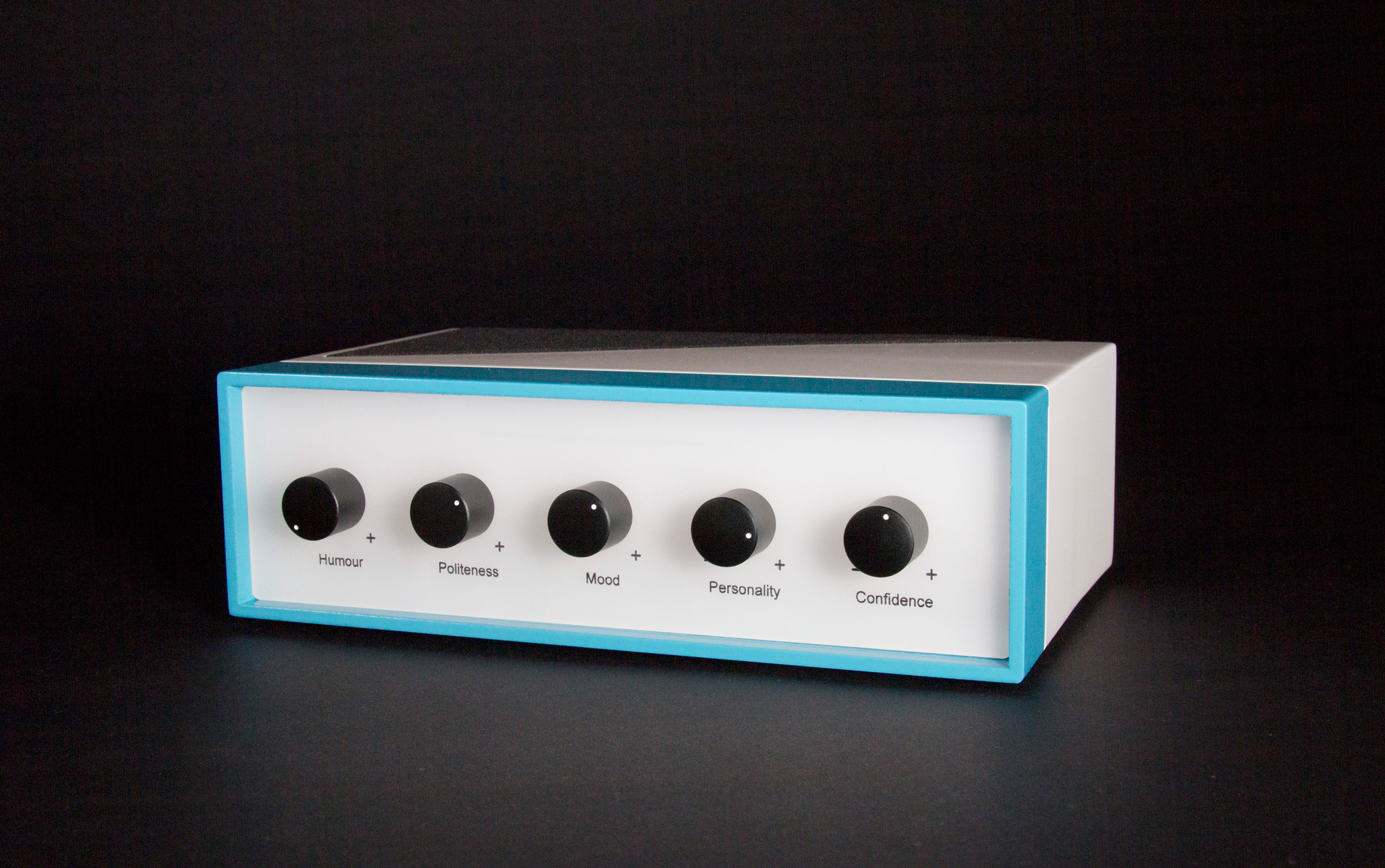
Interview with Things, Botanic Printers
作者只在OOO所展示的方法論上有共鳴,但本體論上非常懷疑: "So, while I will draw methodologically on the modes of speculation that OOO puts forward, I am more sceptical about its ontological position."
能動實在論,基於波爾的哲學,一種操演性的後人類本體論: "In ‘Meeting the Universe Halfway’ Barad [2007], a theoretical physicist and feminist theorist, develops Agential Realism as a performative and posthumanist ontology on the back of Niels Bohr’s philosophy-physics"
操演性:被產製為論述現象之前,事物並不存在: "and turns to performativity, i.e., the idea that nothing exists before it is produced as a discursive phenomenon."
OOO事物有獨立的存在,能動實在論(AR)只在論述實踐中事物才存在: "As such, Barad argues the exact opposite to OOO, where things exist independent of their relations, while in Agential Realism things are only coming into existence through discursive practices."
ENTANGLEMENT HCI: 人與工具互相定義,共同進化: "Humans and their tools mutually define themselves and co-evolve over time."
我們不是設計電腦或互動,而是制定現象的配置: "First, we are not designing computers,
nor can we design interactions. What we seem to be doing is creating configurations that
enact certain phenomena."
配置:人與非人行動者內在互動的混合網絡: "Configurations are hybrid networks
in which human and non-human actors intra-act."
人 social construct並沒有那麼偉大
"Naive realism falls short in very much the same ways: the material world is rendered the only reality that matters—and it is entirely passive and detached from the human activities that are used to inquire into the qualities of the real world. Within a relational and performative ontology, the dichotomy between social construction and independent reality is resolved: non-human and human actors enact (construct) reality, i.e., nothing is social (or everything) and nothing is independent."
衍射,diffraction: "Barad [2007] argues for diffraction as a knowledge production method that is much more attuned to performativity, as it attends to the differences, relationalities and the uncertainties in the differential becoming of things."
倫理-本體-認識一體:"So, every intra-action in assemblages of human and non-human actors not only draws ontological boundaries and determines ways of knowing, it also is an ethical encounter."
透過連續的邊界創造與親密的纏結,發現人與事物間的移動的本體本質: "The continuous boundary making and intimate entanglement in intra-action further shifts our attention from impact to the shifting ontological nature of humans and things."
"I want to argue to abandon user-centred design. Not because humans do not matter, quite to the contrary: to shape who we want to be in this world, we should be designing meaningful relations, not user experiences. Meaningful Design encompasses the political mattering of things through which we make sense of us in the world, going beyond what we experience, but who we want to be. This kind
of Dasein (being-in-the-world) could be interpreted as an ethical take on Heidegger’s philosophy..."
"I argue we need to evolve our PD practices and think of how we can create spaces and processes
that enable humans and non-humans to come together in the creative, political, controversial Participatory Speculation and mattering of future socio-technical configurations."
處境共同推測: situated experiential co-speculation
"I am suggesting to move from optimising user experience to
designing meaningful relations that are enacted as part of our
ongoing re-configuring the world."
2.
"...entanglements between home dwellers
and their home data."
3.
Real-Fictional Entanglements
"Rather than viewing science fiction as an external force that influences technological
research and development, through design we highlight
how the real and fictional are integrally connected and
entangled. "
"By engaging in real-fictional
entanglements, design fiction can be used generate design
ideas that explore and reflect on futures which might
otherwise go unnoticed. "
Final project requirement:
Neuromancer X Everyday Entanglement
Demo & Exhibition
1. posters (any size)
2. Design fiction props (artifacts, newspapers, DMs, ..., any other kinds of format)
3. 10 mins presentation (using PPT or report in ACM format)
Report, photos (or trailers) :
2. ACM SIGCHI Extend Abstract (EA) format 6~10 pages
3. includes: Introduction, Background, Design research gaps, The Design, the deployment in contexts (real or fictional, simulated), Probing and Data collecting, Findings and Implications, Discussion, and Conclusion
4. photos include: mood boards, concept sketches, final props and visuals, speculative scenarios in Everyday contexts (home, street, office, city, ...)
Due date: 6/24, 2020
upload to google drive